The official data lists 142 versions of the BMW X2 (2016–2027), in the European Union, the United Kingdom, the United States, and Canada. Each market publishes its own figures, measured on its own test procedure.
At a glance
Years in the data
2016–2027
Markets
European Union, United Kingdom, United States, Canada
Engines
1.5 L to 2.0 L
Power
85 kW (116 PS) to 225 kW (306 PS)
Fuels
Hybrid, Diesel, Petrol, Plug-in hybrid, Electric
Lowest consumption (European Union)
4.8 L/100 km (WLTP)
Lowest consumption (United Kingdom)
5.8 L/100 km (WLTP)
Lowest consumption (United States)
8.4 L/100 km (EPA)
Plug-in hybrid, weighted (European Union)
1.7 L/100 km (WLTP)
New registrations in the EU
340,709
What is the BMW X2?
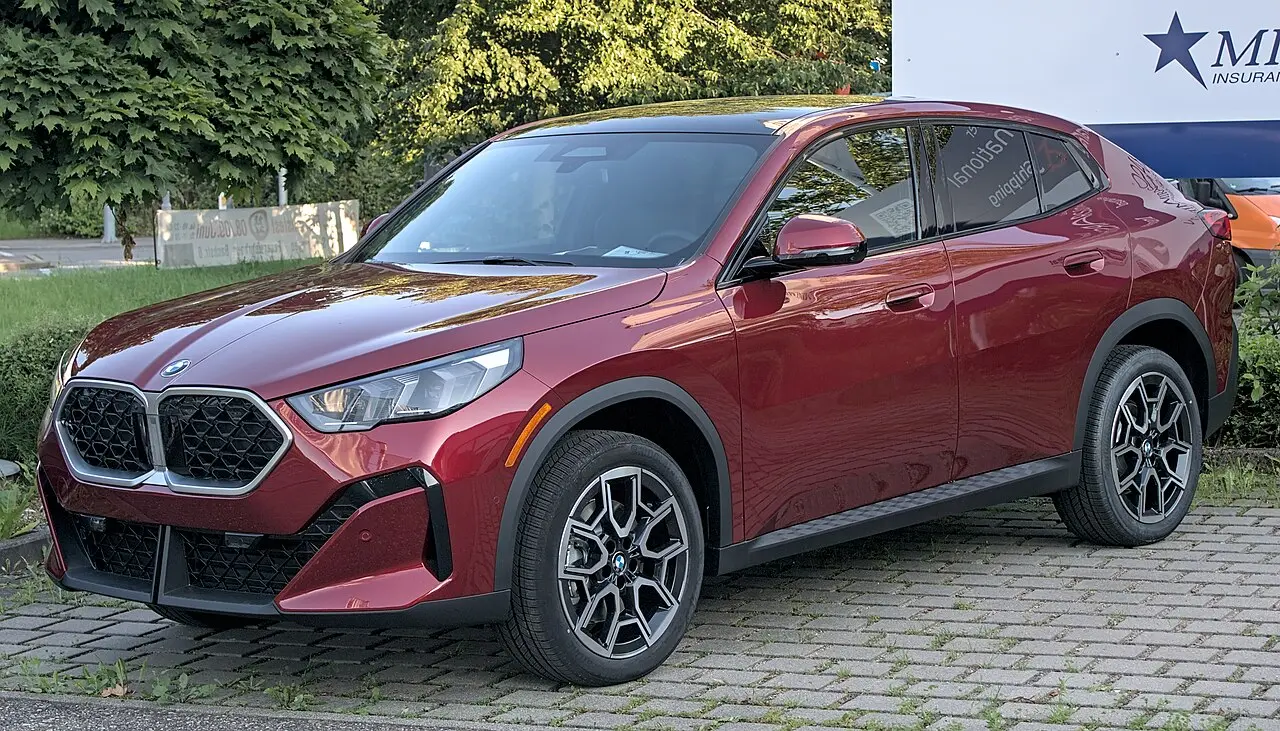
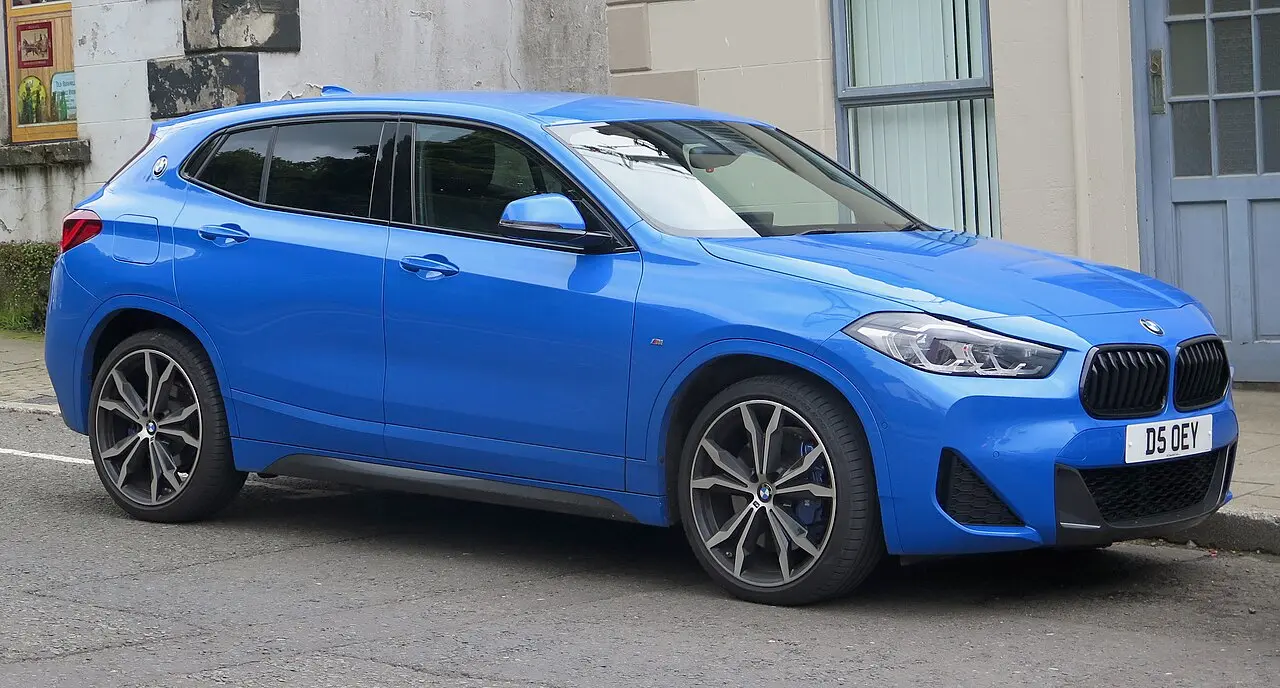
The BMW X2 is a compact crossover with a coupé-like roofline. BMW calls this shape a Sports Activity Coupé, combining an SUV-style raised seating position with a sleeker profile. It sits alongside the more upright X1 in BMW’s compact X range.
The first X2 introduced this coupé-inspired shape to BMW’s compact range. Its successor grew larger and made the sloping roofline more prominent. The newer cabin brought a curved display and updated digital controls, and the range gained an electric counterpart, the iX2.
BMW X2 generations
The first generation, F39, ran from 2018 to 2023. The second generation, U10, began in 2023 and continues today. It brought a larger body, a more pronounced coupé shape and a more digital interior.
Engines and power
Across EU registrations from 2016 to 2025, X2 versions span 1.5 to 2.0 litres and 85 kW (116 PS) to 225 kW (306 PS). The range includes petrol, diesel, hybrid, plug-in hybrid and electric versions. Among the most registered EU versions were a 2.0-litre diesel rated at 110 kW (150 PS) and a 1.5-litre petrol rated at 103 kW (140 PS).
The range varies by market. UK versions listed for 2025–2026 include petrol and hybrid models. US EPA and Canadian NRCan figures cover 2.0-litre petrol versions.
How economical is the BMW X2?
The lowest listed EU combined consumption for petrol, diesel and hybrid versions is 4.8 L/100 km on WLTP. The plug-in hybrid’s official weighted figure is 1.7 L/100 km WLTP, based on the assumption that some driving is electric. The UK figure is 5.8 L/100 km WLTP. The best US combined rating is 28 MPG, or 8.4 L/100 km on EPA; Canada lists 8.4 L/100 km on its 5-cycle test.
Test procedures differ: Europe and the UK use WLTP for these results, the US uses EPA, and Canada uses its 5-cycle procedure. EU registrations total 340,709 X2s across the period shown.
Where was the BMW X2 sold?
The X2 appears in registration and test figures for the EU, UK, United States and Canada. The electric iX2 joined the family with the second generation.
Questions and answers
When did the BMW X2 generations run?
The F39 ran from 2018 to 2023. The U10 began in 2023 and continues today.
What is the lowest listed EU fuel consumption?
It is 4.8 L/100 km WLTP for petrol, diesel and hybrid versions. The plug-in hybrid has a weighted figure of 1.7 L/100 km WLTP.
How much power does the X2 have?
EU-listed versions range from 85 kW (116 PS) to 225 kW (306 PS).
Which markets have figures for the X2?
Figures are available for the EU, UK, US and Canada. Their test procedures differ.
New cars registered in the EU (plus Norway and Iceland), from the European Environment Agency. Figures on the NEDC procedure until 2020 and on WLTP from 2021; versions are grouped by engine and power, with their number of registrations.
Years and version
Engine
Power
Fuel
Consumption (combined)
CO₂
Electric range
EU registrations
2025
2.0 L
110 kW (150 PS)
Hybrid
4.8 L/100 km WLTP
125 g/km
–
9,982
2025
1.5 L
115 kW (156 PS)
Hybrid
5.8 L/100 km WLTP
132 g/km
–
8,747
2025
2.0 L
110 kW (150 PS)
Diesel
5.2 L/100 km WLTP
136 g/km
–
5,764
2025
2.0 L
221 kW (300 PS)
Petrol
7.9 L/100 km WLTP
179 g/km
–
2,290
2025
1.5 L
100 kW (136 PS)
Petrol
6.4 L/100 km WLTP
145 g/km
–
262
2025
1.5 L
100 kW (136 PS)
Hybrid
5.8 L/100 km WLTP
132 g/km
–
229
2025
2.0 L
110 kW (150 PS)
Plug-in hybrid
4.9 L/100 km WLTP
129 g/km
–
116
2025
1.5 L
115 kW (156 PS)
Plug-in hybrid
5.8 L/100 km WLTP
132 g/km
–
23
2025
2.0 L
100 kW (136 PS)
Diesel
5.2 L/100 km WLTP
136 g/km
–
23
2025
1.5 L
92 kW (125 PS)
Plug-in hybrid
1.7 L/100 km WLTP15.4 kWh/100 km WLTP
39 g/km
53 km
12
2024
1.5 L
115 kW (156 PS)
Hybrid
5.9 L/100 km WLTP
133 g/km
–
8,561
2024
2.0 L
110 kW (150 PS)
Diesel
5.2 L/100 km WLTP
136 g/km
–
8,030
2024
2.0 L
110 kW (150 PS)
Hybrid
4.9 L/100 km WLTP
128 g/km
–
4,050
2024
2.0 L
221 kW (300 PS)
Petrol
7.9 L/100 km WLTP
178 g/km
–
2,358
2023–2024
2.0 L
225 kW (306 PS)
Petrol
7.7 L/100 km WLTP
176 g/km
–
346
2024
1.5 L
92 kW (125 PS)
Plug-in hybrid
2.4 L/100 km WLTP15.3 kWh/100 km WLTP
39 g/km
53 km
275
2024
1.5 L
100 kW (136 PS)
Hybrid
6.0 L/100 km WLTP
136 g/km
–
261
2024
1.5 L
85 kW (116 PS)
Diesel
5.1 L/100 km WLTP
133 g/km
–
214
2024
1.5 L
100 kW (136 PS)
Petrol
6.3 L/100 km WLTP
145 g/km
–
192
2024
Electric motor
68 kW (92 PS)
Electric
16.1 kWh/100 km WLTP
0 g/km
456 km
124
2024
2.0 L
131 kW (178 PS)
Petrol
6.8 L/100 km WLTP
156 g/km
–
97
2024
2.0 L
100 kW (136 PS)
Diesel
5.2 L/100 km WLTP
136 g/km
–
37
2024
1.5 L
115 kW (156 PS)
Petrol
5.8 L/100 km WLTP
135 g/km
–
30
2024
2.0 L
140 kW (190 PS)
Diesel
5.3 L/100 km WLTP
144 g/km
–
24
2024
1.5 L
115 kW (156 PS)
Plug-in hybrid
6.2 L/100 km WLTP
140 g/km
–
15
2023
1.5 L
100 kW (136 PS)
Petrol
6.3 L/100 km WLTP
146 g/km
–
4,070
2023
1.5 L
92 kW (125 PS)
Plug-in hybrid
1.7 L/100 km WLTP15.2 kWh/100 km WLTP
38 g/km
53 km
3,254
2023
2.0 L
110 kW (150 PS)
Diesel
5.3 L/100 km WLTP
139 g/km
–
2,904
2023
1.5 L
85 kW (116 PS)
Diesel
5.1 L/100 km WLTP
134 g/km
–
1,688
2023
2.0 L
131 kW (178 PS)
Petrol
6.7 L/100 km WLTP
157 g/km
–
1,342
2023
2.0 L
140 kW (190 PS)
Diesel
5.5 L/100 km WLTP
147 g/km
–
1,097
2023
2.0 L
170 kW (231 PS)
Diesel
5.8 L/100 km WLTP
152 g/km
–
121
2023
1.5 L
115 kW (156 PS)
Hybrid
6.3 L/100 km WLTP
142 g/km
–
91
2023
2.0 L
221 kW (300 PS)
Petrol
7.8 L/100 km WLTP
177 g/km
–
73
2023
2.0 L
110 kW (150 PS)
Hybrid
–
–
–
35
2023
2.0 L
100 kW (136 PS)
Diesel
5.2 L/100 km WLTP
136 g/km
–
28
2023
1.5 L
92 kW (125 PS)
Hybrid
1.8 L/100 km WLTP
112 g/km
–
24
United Kingdom 6 versions
New cars on sale in the UK, from the Vehicle Certification Agency. NEDC figures until 2018 and WLTP figures after; years are the editions a version appeared in.
Years and version
Engine
Power
Fuel
Gearbox
Consumption (combined)
CO₂
2025–2026X2 sDrive20i M Sport
1.5 L
125 kW (170 PS)
Hybrid
7-speed automatic
5.8 L/100 km WLTP
143 g/km
2026X2 sDrive20i M Sport
1.5 L
125 kW (170 PS)
Hybrid
7-speed automatic
5.8 L/100 km WLTP
131 g/km
2025–2026X2 M35i xDrive
2.0 L
221 kW (300 PS)
Petrol
7-speed automatic
8.2 L/100 km WLTP
174 g/km
2025–2026X2 M35i xDrive
2.0 L
221 kW (300 PS)
Petrol
7-speed automatic
7.7 L/100 km WLTP
186 g/km
2026X2 M35i
2.0 L
221 kW (300 PS)
Petrol
7-speed automatic
7.7 L/100 km WLTP
174 g/km
2025X2 sDrive20i M Sport
1.5 L
125 kW (170 PS)
Hybrid
7-speed automatic
6.3 L/100 km WLTP
131 g/km
United States 9 versions
Model years sold in the USA, from the EPA and the Department of Energy (fueleconomy.gov). MPG on the EPA test; litres per 100 km = 235.215 ÷ MPG.
Years and version
Engine
Fuel
Gearbox
Drive
Consumption (combined)
CO₂
2027SIDI & PFI
2.0 L
Petrol
7-speed automated manual
All-wheel drive
28 MPG (8.4 L/100 km) EPA
196 g/km
2027SIDI & PFI
2.0 L
Petrol
7-speed automated manual
All-wheel drive
26 MPG (9.0 L/100 km) EPA
211 g/km
2026SIDI & PFI
2.0 L
Petrol
7-speed automated manual
All-wheel drive
28 MPG (8.4 L/100 km) EPA
195 g/km
2026SIDI & PFI
2.0 L
Petrol
7-speed automated manual
All-wheel drive
26 MPG (9.0 L/100 km) EPA
210 g/km
2024–2025SIDI & PFI
2.0 L
Petrol
7-speed automated manual
All-wheel drive
28 MPG (8.4 L/100 km) EPA
198 g/km
2025SIDI & PFI
2.0 L
Petrol
7-speed automated manual
All-wheel drive
26 MPG (9.0 L/100 km) EPA
206 g/km
2024SIDI & PFI
2.0 L
Petrol
7-speed automated manual
All-wheel drive
26 MPG (9.0 L/100 km) EPA
207 g/km
2023SIDI
2.0 L
Petrol
8-speed automatic
All-wheel drive
27 MPG (8.7 L/100 km) EPA
207 g/km
2023SIDI
2.0 L
Petrol
8-speed automatic
Front-wheel drive
27 MPG (8.7 L/100 km) EPA
204 g/km
Canada 5 versions
Model years sold in Canada, from Natural Resources Canada fuel consumption ratings (5-cycle test).
Years and version
Engine
Fuel
Gearbox
Consumption (combined)
CO₂
2026Sport utility vehicle: Small
2.0 L
Petrol
7-speed automated manual
8.4 L/100 km 5-cycle
195 g/km
2026Sport utility vehicle: Small
2.0 L
Petrol
7-speed automated manual
9.1 L/100 km 5-cycle
210 g/km
2024–2025Sport utility vehicle: Small
2.0 L
Petrol
7-speed automated manual
8.5 L/100 km 5-cycle
198 g/km
2025Sport utility vehicle: Small
2.0 L
Petrol
7-speed automated manual
8.9 L/100 km 5-cycle
206 g/km
2024Sport utility vehicle: Small
2.0 L
Petrol
7-speed automated manual
8.9 L/100 km 5-cycle
207 g/km
Versions outside these generations
European Union 6 versions
New cars registered in the EU (plus Norway and Iceland), from the European Environment Agency. Figures on the NEDC procedure until 2020 and on WLTP from 2021; versions are grouped by engine and power, with their number of registrations.
Years and version
Engine
Power
Fuel
CO₂
EU registrations
2017
2.0 L
140 kW (190 PS)
Diesel
126 g/km
280
2017
2.0 L
141 kW (192 PS)
Petrol
134 g/km
88
2017
2.0 L
170 kW (231 PS)
Diesel
139 g/km
58
2016
2.0 L
140 kW (190 PS)
Diesel
132 g/km
60
2016
2.0 L
141 kW (192 PS)
Petrol
151 g/km
50
2016
2.0 L
170 kW (231 PS)
Petrol
149 g/km
32
Official figures are measured on standard test procedures and differ between markets. Your consumption depends on how, where and in what conditions you drive.