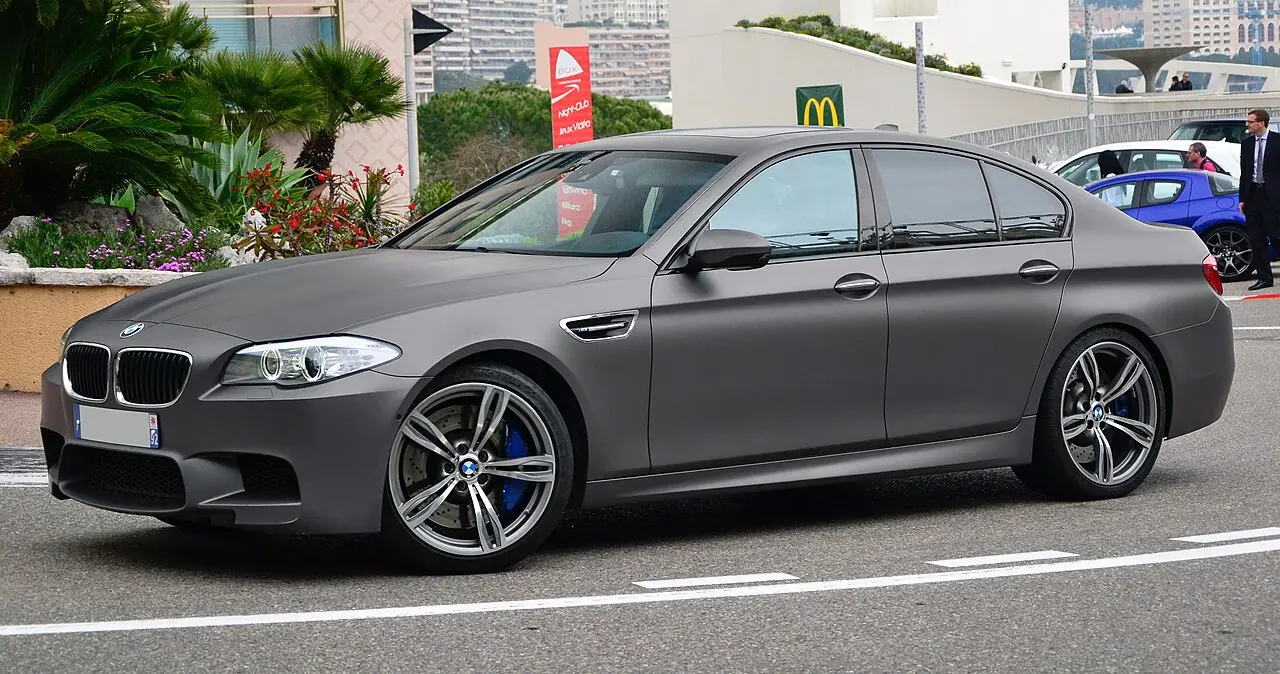
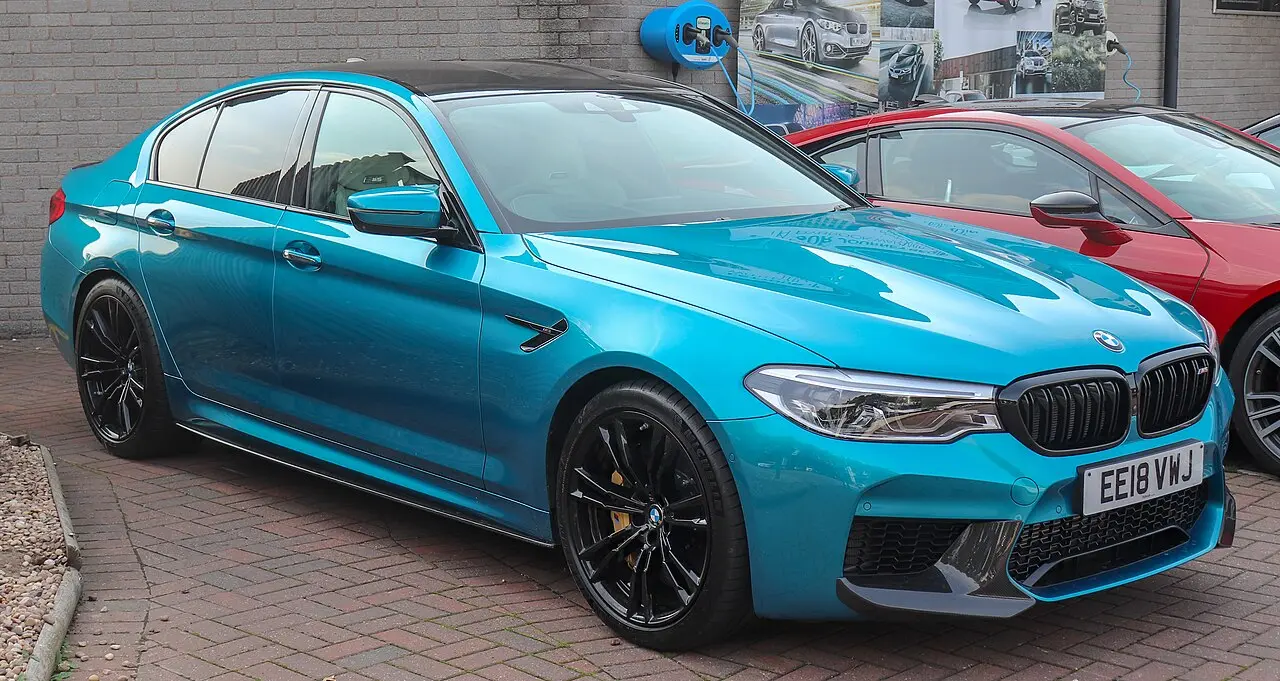
The official data lists 92 versions of the BMW M5 (1991–2027), in the European Union, the United Kingdom, France, the United States, and Canada. Each market publishes its own figures, measured on its own test procedure.
At a glance
Years in the data
1991–2027
Markets
European Union, United Kingdom, France, United States, Canada
Engines
3.5 L to 5.0 L
Power
412 kW (560 PS) to 535 kW (727 PS)
Fuels
Petrol, Plug-in hybrid, Hybrid
Lowest consumption (France)
9.9 L/100 km (NEDC)
Lowest consumption (European Union)
10.3 L/100 km (WLTP)
Lowest consumption (Canada)
12.8 L/100 km (5-cycle)
Plug-in hybrid, weighted (European Union)
1.8 L/100 km (WLTP)
Plug-in hybrid, weighted (Canada)
16.4 L/100 km (5-cycle)
New registrations in the EU
37,066
What is the BMW M5?
The BMW M5 is a high-performance saloon developed by BMW M, BMW’s performance division. It combines the space and everyday usability of a four-door car with M-developed performance. The E34 generation was also offered as a Touring estate.
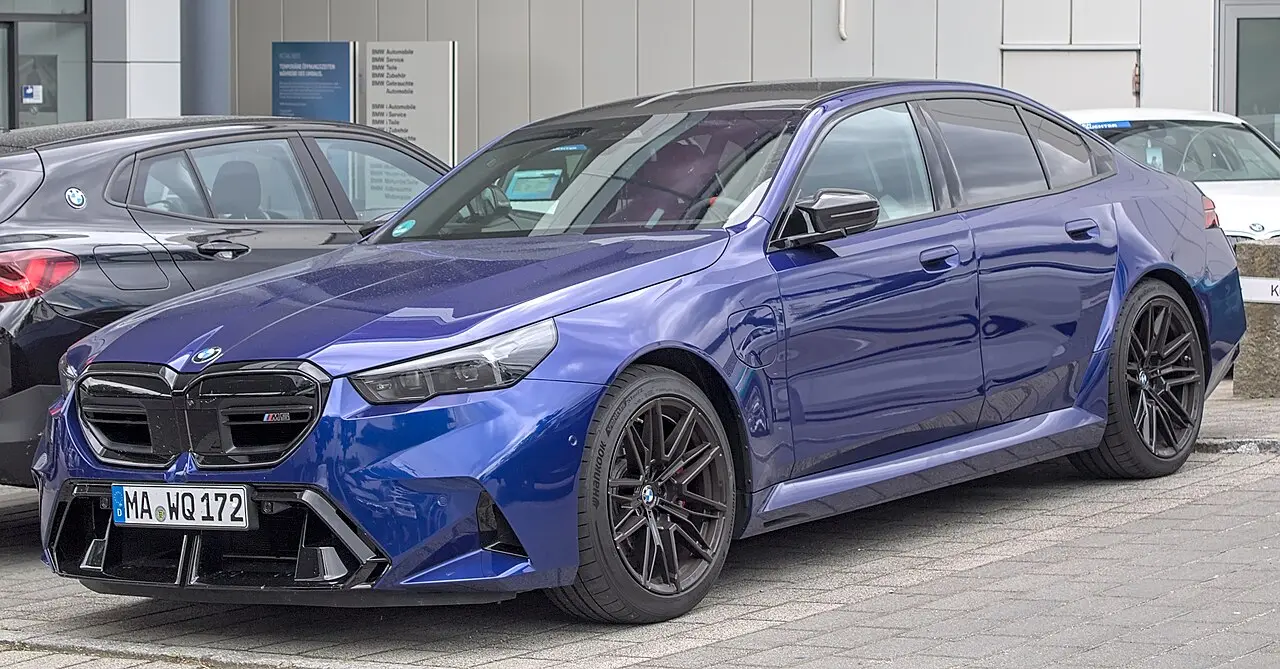
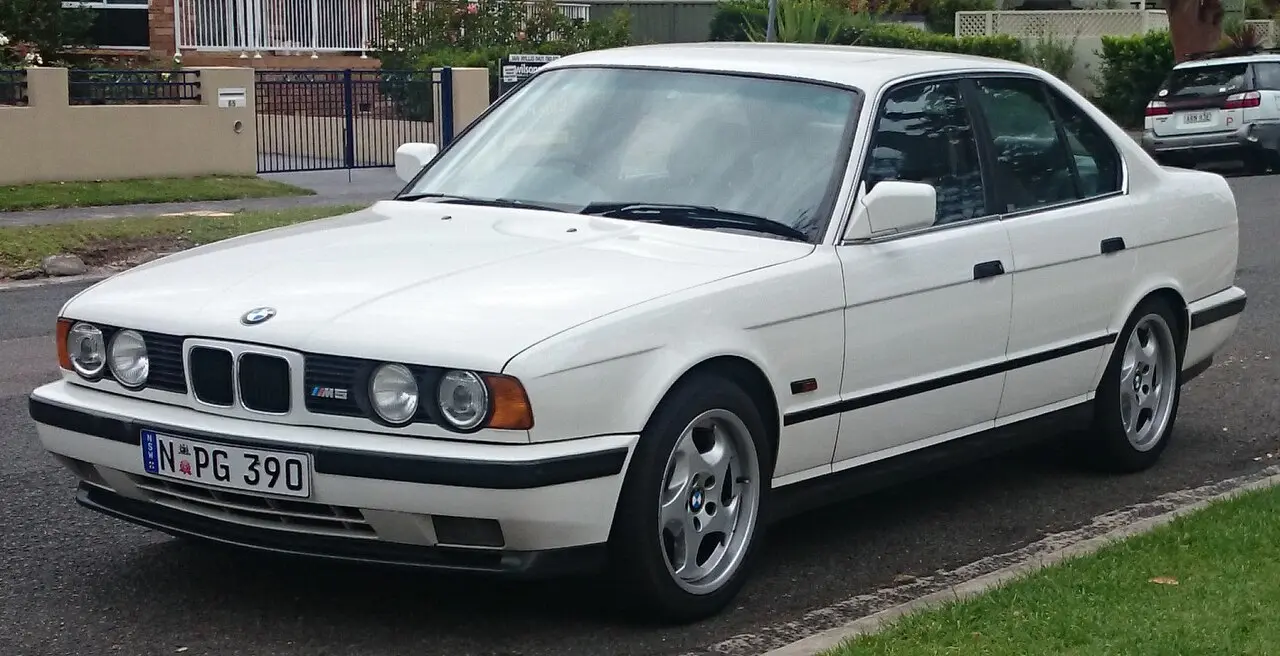
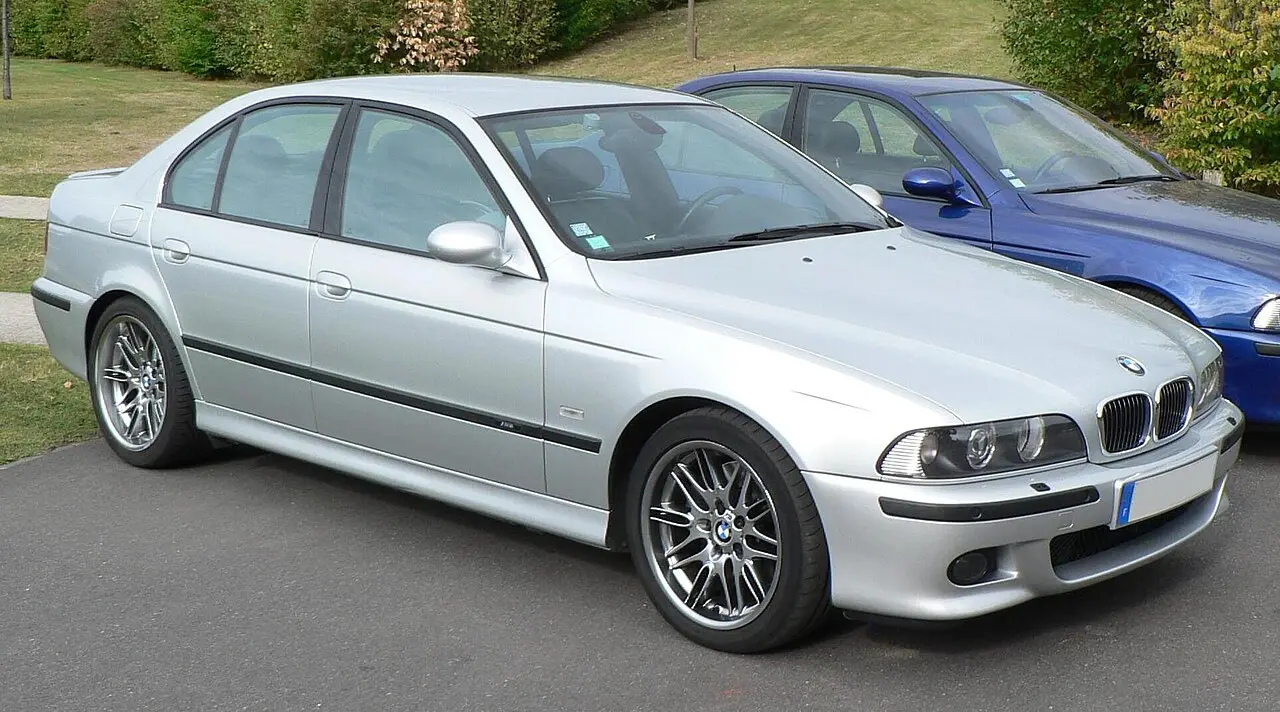
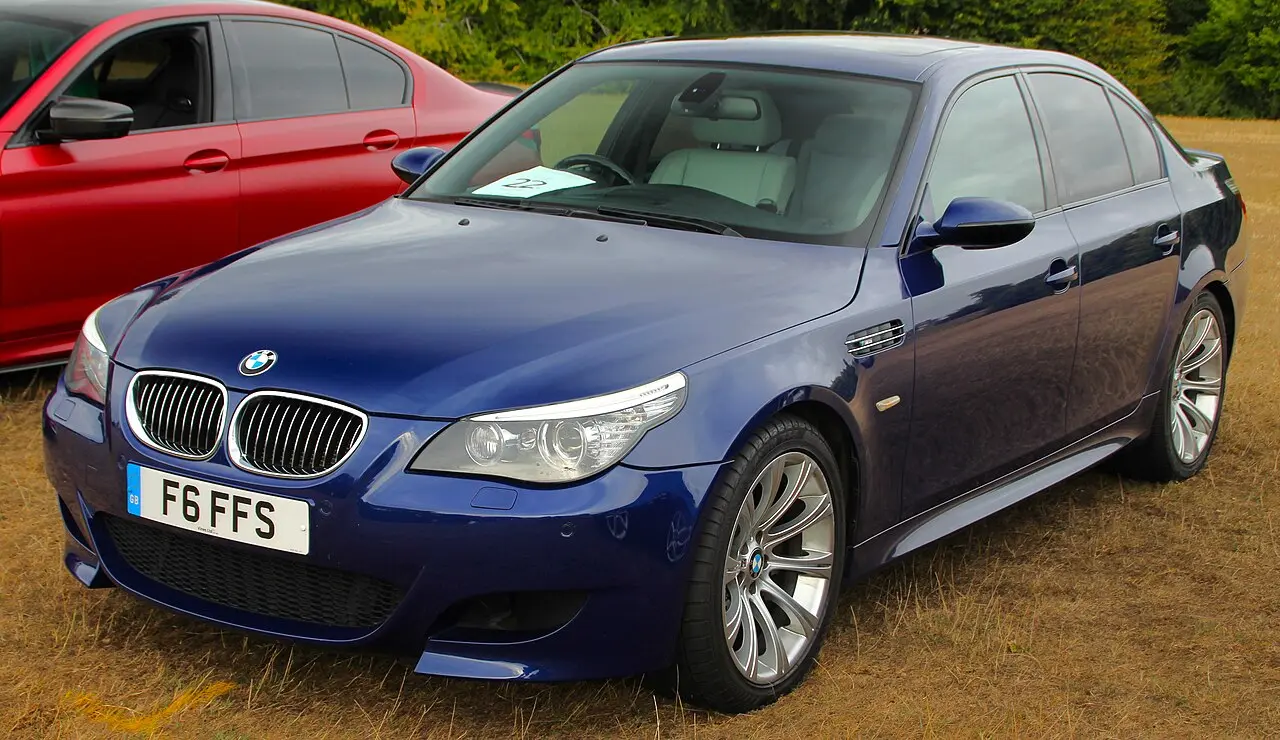
BMW introduced the first M5 in 1985. Later generations include the E34 (1988–1995), E39 (1998–2003), E60 (2005–2010), F10 (2011–2016), F90 (2017–2023) and G90 (2024–today). The E60’s naturally aspirated V10 marked a dramatic change in engine character; the F10 brought twin-turbocharged V8 power, and the current generation adds plug-in hybrid drive.
Engines and power
In EU registration figures, M5 engines range from 4.4 L to 5.0 L, with outputs from 412 kW (560 PS) to 467 kW (635 PS). Petrol power has been central to the model’s history, while the current generation adds a 4.4 L plug-in hybrid. The EU figures include a 430 kW (585 PS) version; UK figures list a 535 kW (727 PS) plug-in hybrid.
The M5’s engine character has shifted across generations, from six-cylinder engines to V8 and V10 power, then turbocharged V8s. The plug-in hybrid pairs a combustion engine with electric drive and can cover some driving using electricity.
How economical is the BMW M5?
The lowest listed conventional consumption in the EU is 10.3 L/100 km on the WLTP test. The lowest plug-in hybrid figure is 1.8 L/100 km WLTP. This weighted figure assumes that some driving is electric, so it depends on charging and electric use.
In the USA, the lowest listed conventional figure is 13.8 L/100 km under EPA testing, and the plug-in hybrid figure is 16.8 L/100 km. Canada lists 12.8 L/100 km for conventional versions and 16.4 L/100 km for the plug-in hybrid under its 5-cycle procedure. France lists 9.9 L/100 km on NEDC for the petrol versions covered there. Test procedures differ: Europe uses WLTP or the older NEDC, the USA uses EPA, and Canada uses 5-cycle testing.
Where was the BMW M5 sold?
The M5 appears in official figures for the EU, UK, France, USA and Canada. EU registration figures span 2010–2025 and record 37,066 cars. The USA figures span 1991–2027, Canada’s 1999–2026, the UK’s 2025–2026 and France’s 2012–2015.
Questions and answers
Is the BMW M5 a saloon or an estate?
It is a high-performance saloon. The E34 generation was also offered as a Touring estate.
Does the BMW M5 come as a plug-in hybrid?
Yes. The current generation includes a 4.4 L plug-in hybrid, and UK figures list plug-in hybrid versions.
What is the lowest official M5 fuel consumption figure?
The lowest listed figure is 1.8 L/100 km WLTP for an EU plug-in hybrid. It is a weighted figure that assumes some driving is electric.
Which M5 generations are included?
They are the E34 (1988–1995), E39 (1998–2003), E60 (2005–2010), F10 (2011–2016), F90 (2017–2023) and G90 (2024–today).
New cars registered in the EU (plus Norway and Iceland), from the European Environment Agency. Figures on the NEDC procedure until 2020 and on WLTP from 2021; versions are grouped by engine and power, with their number of registrations.
Years and version
Engine
Power
Fuel
Consumption (combined)
CO₂
Electric range
EU registrations
2025
4.4 L
430 kW (585 PS)
Plug-in hybrid
1.9 L/100 km WLTP24.9 kWh/100 km WLTP
43 g/km
67 km
6,196
2025
4.4 L
430 kW (585 PS)
Hybrid
–
237 g/km
–
96
2025
4.4 L
425 kW (578 PS)
Plug-in hybrid
–
50 g/km
73 km
41
2025
4.4 L
395 kW (537 PS)
Plug-in hybrid
–
50 g/km
75 km
15
2025
4.4 L
430 kW (585 PS)
Petrol
–
344 g/km
–
11
2024
4.4 L
430 kW (585 PS)
Plug-in hybrid
1.8 L/100 km WLTP25.4 kWh/100 km WLTP
38 g/km
68 km
820
2024
4.4 L
425 kW (578 PS)
Plug-in hybrid
–
–
71 km
63
2024
4.4 L
430 kW (585 PS)
Hybrid
10.3 L/100 km WLTP
236 g/km
–
51
2024
4.4 L
460 kW (625 PS)
Petrol
10.8 L/100 km WLTP
256 g/km
–
10
United Kingdom 8 versions
New cars on sale in the UK, from the Vehicle Certification Agency. NEDC figures until 2018 and WLTP figures after; years are the editions a version appeared in.
Years and version
Engine
Power
Fuel
Gearbox
Consumption (combined)
CO₂
Electric range
2025–2026M5 Saloon
4.4 L
535 kW (727 PS)
Plug-in hybrid
8-speed automatic
26.8 kWh/100 km WLTP
–
63 km
2025–2026M5 Saloon
4.4 L
535 kW (727 PS)
Plug-in hybrid
8-speed automatic
25.0 kWh/100 km WLTP
–
69 km
2025–2026M5 Touring
4.4 L
535 kW (727 PS)
Plug-in hybrid
8-speed automatic
27.6 kWh/100 km WLTP
–
61 km
2025–2026M5 Touring
4.4 L
535 kW (727 PS)
Plug-in hybrid
8-speed automatic
25.8 kWh/100 km WLTP
–
66 km
2026M5 Saloon
4.4 L
535 kW (727 PS)
Plug-in hybrid
8-speed automatic
17.7 kWh/100 km WLTP
118 g/km
65 km
2026M5 Saloon
4.4 L
535 kW (727 PS)
Plug-in hybrid
8-speed automatic
16.8 kWh/100 km WLTP
105 g/km
72 km
2026M5 Touring
4.4 L
535 kW (727 PS)
Plug-in hybrid
8-speed automatic
18.1 kWh/100 km WLTP
124 g/km
62 km
2026M5 Touring
4.4 L
535 kW (727 PS)
Plug-in hybrid
8-speed automatic
17.2 kWh/100 km WLTP
110 g/km
69 km
United States 3 versions
Model years sold in the USA, from the EPA and the Department of Energy (fueleconomy.gov). MPG on the EPA test; litres per 100 km = 235.215 ÷ MPG.
Years and version
Engine
Fuel
Gearbox
Drive
Consumption (combined)
CO₂
2025–2027SIDI; PHEV
4.4 L
Plug-in hybrid
8-speed automatic
All-wheel drive
13 MPG (18.1 L/100 km) EPA
189 g/km
2026–2027SIDI; PHEV
4.4 L
Plug-in hybrid
8-speed automatic
All-wheel drive
14 MPG (16.8 L/100 km) EPA
164 g/km
2025SIDI; PHEV
4.4 L
Plug-in hybrid
8-speed automatic
All-wheel drive
14 MPG (16.8 L/100 km) EPA
177 g/km
Canada 3 versions
Model years sold in Canada, from Natural Resources Canada fuel consumption ratings (5-cycle test).
Years and version
Engine
Fuel
Gearbox
Consumption (combined)
CO₂
Electric range
2025–2026Station wagon: Mid-size
4.4 L
Plug-in hybrid
8-speed automatic
17.5 L/100 km 5-cycle
189 g/km
40 km
2026Mid-size
4.4 L
Plug-in hybrid
8-speed automatic
16.4 L/100 km 5-cycle
164 g/km
47 km
2025Mid-size
4.4 L
Plug-in hybrid
8-speed automatic
17.3 L/100 km 5-cycle
177 g/km
43 km
Official figures are measured on standard test procedures and differ between markets. Your consumption depends on how, where and in what conditions you drive.