Aston Martin

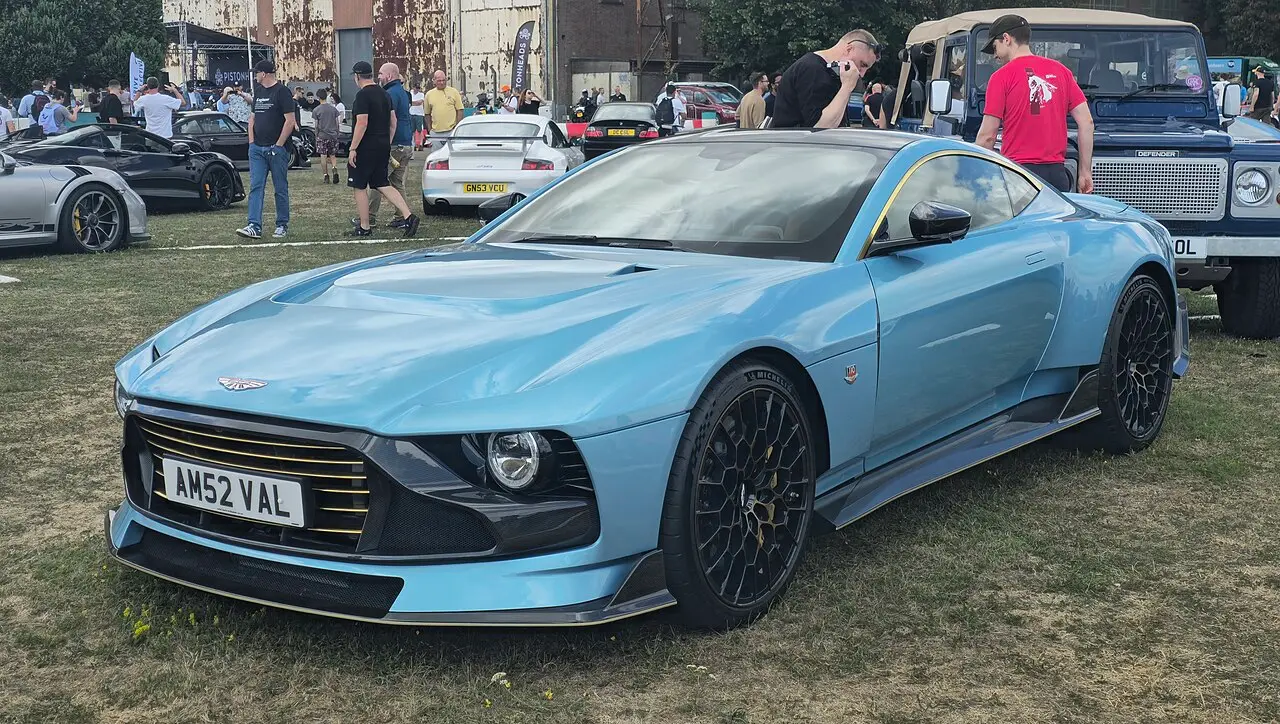
Aston Martin Valour

Aston Martin Valour
Photo: Calreyn88 / Wikimedia Commons · CC BY-SA 4.0

The official data lists 5 versions of the Aston Martin Valour (2024–2026), in the European Union, the United Kingdom, the United States, and Canada. Each market publishes its own figures, measured on its own test procedure.

At a glance

Years in the data
2024–2026
Markets
European Union, United Kingdom, United States, Canada
Engines
5.2 L to 5.2 L
Power
526 kW (715 PS) to 715 kW (972 PS)
Fuels
Petrol
Lowest consumption (United Kingdom)
15.1 L/100 km (WLTP)
Lowest consumption (Canada)
16.3 L/100 km (5-cycle)
Lowest consumption (United States)
16.8 L/100 km (EPA)
New registrations in the EU
19

What is the Aston Martin Valour?

The Valour is a two-seat grand touring sports car that draws on Aston Martin’s heritage. Its shape blends modern design with cues from the marque’s classic V8 sports cars. Inside, a manual gearbox puts the driver at the centre of the experience.

The Valour generation has been listed since 2024. EU registrations are recorded in 2024, and UK VCA figures list versions from 2024 to 2026.

Engine and power

The Valour pairs a 5.2-litre petrol V12 with a six-speed manual transmission. UK VCA figures list two versions, with power from 526 kW (715 PS) to 715 kW (972 PS). EU registration figures identify the 526 kW (715 PS) specification.

How economical is the Aston Martin Valour?

The UK figure is 15.1 L/100 km on WLTP. In the United States, the EPA rates it at 14 MPG combined, or 16.8 L/100 km. Canada’s NRCan 5-cycle figure is 16.3 L/100 km. These figures use different test procedures: WLTP in Europe, EPA in the United States and 5-cycle in Canada, so they are not direct like-for-like results.

Where was the Valour sold?

Valour appears in UK VCA figures for 2024 to 2026, and in EU, US and Canadian figures for 2024. EU registration figures list 19 cars in 2024, all with the 526 kW petrol specification.

Questions and answers

What engine does the Valour use?

It has a 5.2-litre petrol V12 paired with a six-speed manual gearbox.

How much power does the Valour make?

UK VCA figures list versions from 526 kW (715 PS) to 715 kW (972 PS). The EU registration specification is 526 kW (715 PS).

What is the Valour’s official fuel consumption?

The UK figure is 15.1 L/100 km on WLTP. The US EPA rates it at 14 MPG combined, or 16.8 L/100 km, and Canada’s NRCan 5-cycle figure is 16.3 L/100 km.

How many Valours were registered in the EU?

EU registration figures list 19 in 2024.

Valour Valour (since 2024)

Aston Martin Valour Valour
Photo: Calreyn88 / Wikimedia Commons · CC BY-SA 4.0

References: astonmartin.com

European Union 1 version

New cars registered in the EU (plus Norway and Iceland), from the European Environment Agency. Figures on the NEDC procedure until 2020 and on WLTP from 2021; versions are grouped by engine and power, with their number of registrations.

Years and versionEnginePowerFuelConsumption (combined)CO₂EU registrations
20245.2 L526 kW (715 PS)Petrol15.1 L/100 km WLTP345 g/km19

United Kingdom 2 versions

New cars on sale in the UK, from the Vehicle Certification Agency. NEDC figures until 2018 and WLTP figures after; years are the editions a version appeared in.

Years and versionEnginePowerFuelGearboxConsumption (combined)CO₂
2025–202624MY Valour V12 Coupe5.2 L526 kW (715 PS)Petrol6-speed manual15.1 L/100 km WLTP340 g/km
2024Valour V12 Coupe · 24MY Valour V12 Coupe5.2 L715 kW (972 PS)Petrol6-speed manual15.1 L/100 km WLTP340 g/km

United States 1 version

Model years sold in the USA, from the EPA and the Department of Energy (fueleconomy.gov). MPG on the EPA test; litres per 100 km = 235.215 ÷ MPG.

Years and versionEngineFuelGearboxDriveConsumption (combined)CO₂
20245.2 LPetrol6-speed manualRear-wheel drive14 MPG (16.8 L/100 km) EPA385 g/km

Canada 1 version

Model years sold in Canada, from Natural Resources Canada fuel consumption ratings (5-cycle test).

Years and versionEngineFuelGearboxConsumption (combined)CO₂
2024Two-seater5.2 LPetrol6-speed manual16.3 L/100 km 5-cycle383 g/km

Official figures are measured on standard test procedures and differ between markets. Your consumption depends on how, where and in what conditions you drive.