What is the Aston Martin Lagonda?
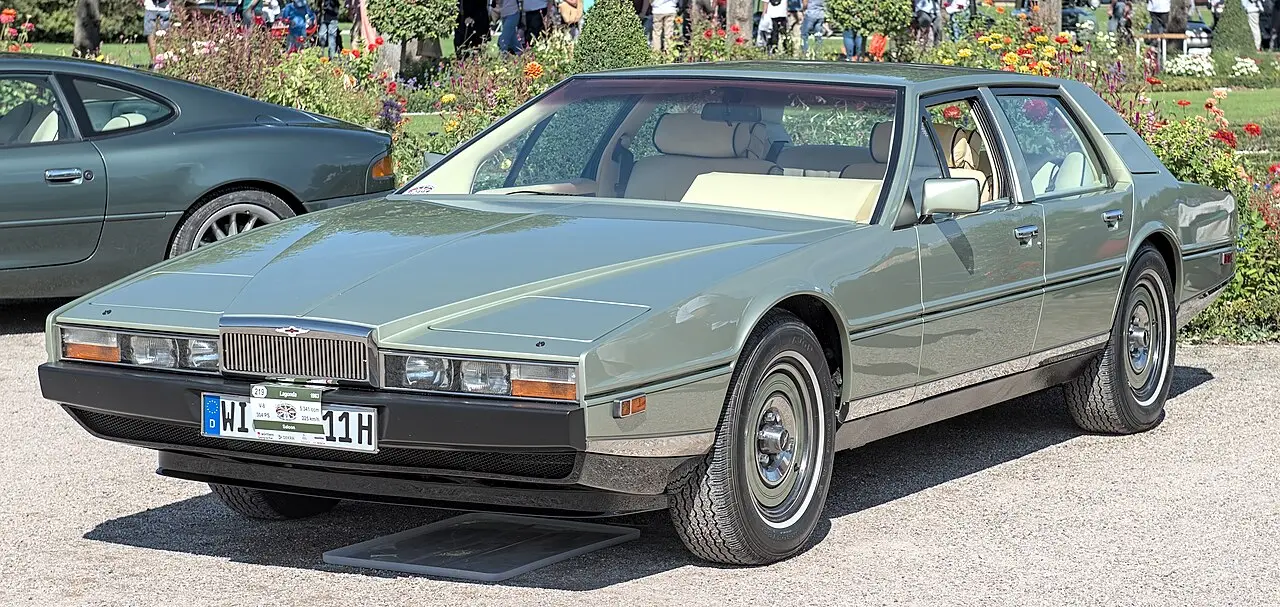
The Lagonda is a four-door luxury saloon designed by William Towns. Its low, sharp-edged shape made it one of the most distinctive cars in Aston Martin’s range, while its digital instruments gave the cabin a futuristic feel for its time.
Aston Martin revealed the car in 1976. The Lagonda name had become part of the company with its acquisition of the marque in 1947, and this saloon carried that name into a new era of luxury motoring.
Lagonda generations and design
The Series 2/3/4 generation ran from 1976 to 1989. Series 2 established the angular four-door design. Later updates refined it, and in 1987 the Series 4 gained softer edges and a redesigned nose, where six smaller lights replaced the pop-up headlamps. Tickford also made more elaborate versions, including long-wheelbase limousines.
Engines and fuel consumption
In the United States, EPA figures cover three petrol versions from 1984 to 1989, each with a 5.3-litre engine. The best combined rating is 9 mpg, equivalent to 26.1 L/100 km. EPA ratings use the US test procedure, so they do not translate directly to European WLTP or NEDC results or Canada’s 5-cycle ratings.
Where was the Lagonda sold?
The Series 2/3/4 generation was sold in the United States, Europe and the United Kingdom. Aston Martin says the car was cleared for US sale in 1982; the EPA figures cover the later years from 1984 to 1989.
Questions and answers
What body style is the Aston Martin Lagonda?
It is a four-door luxury saloon.
When was the Series 2/3/4 Lagonda built?
The generation ran from 1976 to 1989.
What engine did US-market Lagondas have?
The EPA-listed versions use a 5.3-litre petrol engine.
What is its official EPA fuel consumption?
The best combined rating is 9 mpg, or 26.1 L/100 km.