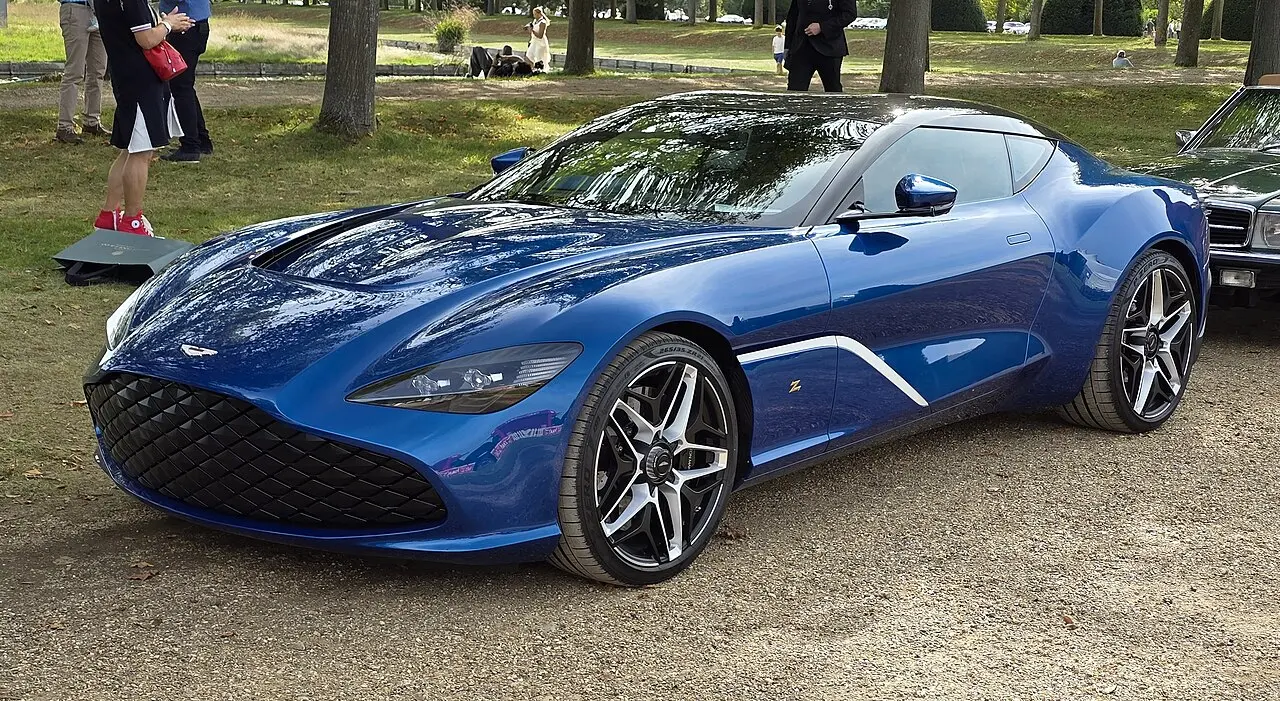
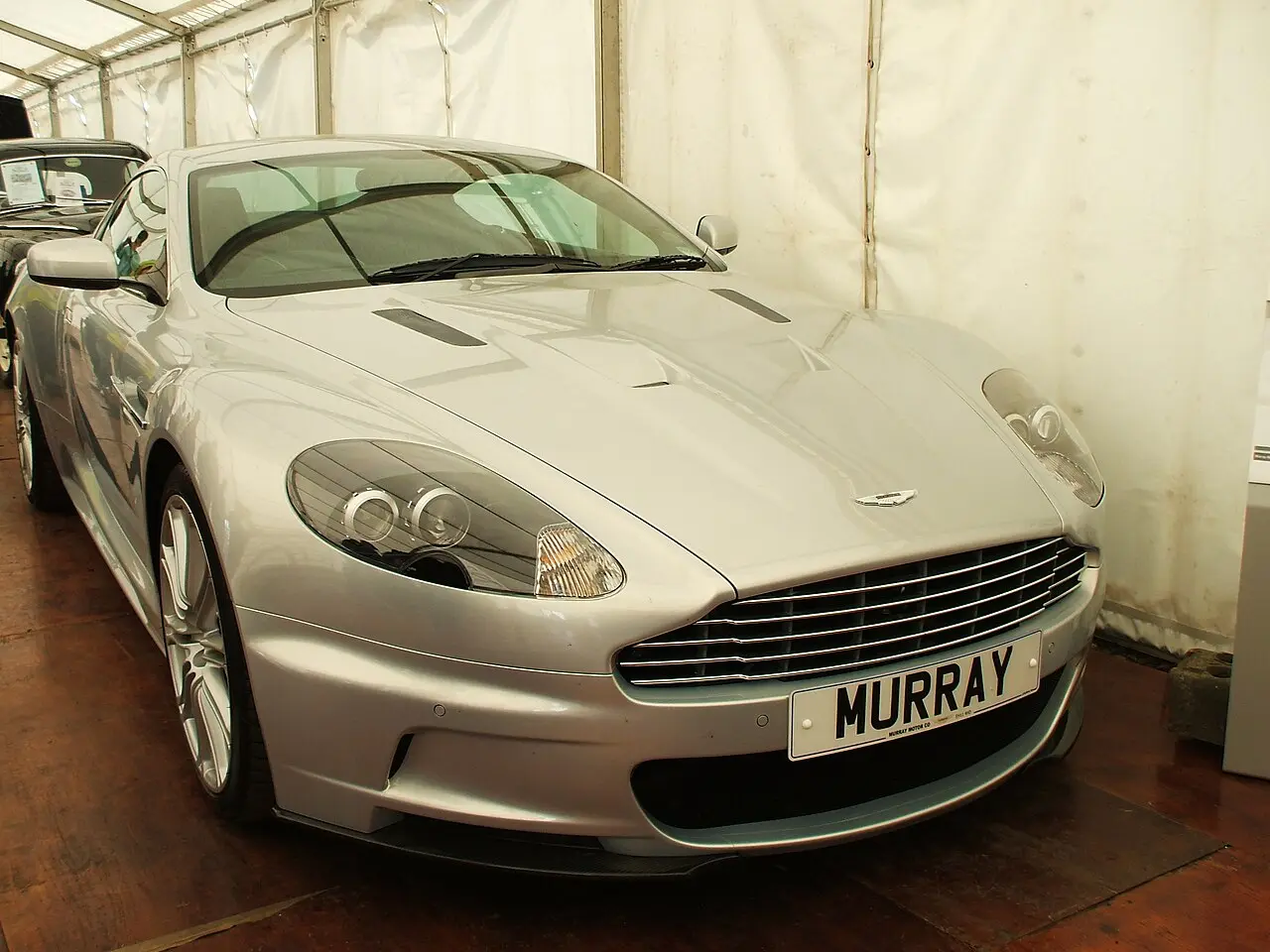
The official data lists 33 versions of the Aston Martin DBS (2008–2024), in the European Union, the United Kingdom, France, the United States, and Canada. Each market publishes its own figures, measured on its own test procedure.
At a glance
Years in the data
2008–2024
Markets
European Union, United Kingdom, France, United States, Canada
Engines
5.2 L to 5.9 L
Power
380 kW (517 PS) to 566 kW (770 PS)
Fuels
Petrol
Lowest consumption (United Kingdom)
12.4 L/100 km (NEDC)
Lowest consumption (European Union)
13.4 L/100 km (WLTP)
Lowest consumption (United States)
13.8 L/100 km (EPA)
New registrations in the EU
3,669
What is the Aston Martin DBS?
The DBS is a high-performance grand tourer that brings together long-distance touring and the presence of a flagship sports car. The badge has returned in different eras, including as the DBS V12 and later the DBS Superleggera. The latter name brought back Superleggera, a historic coachbuilding mark associated with lightweight construction.
DBS generations
The DBS V12 generation ran from 2007 to 2012. After a break, the name returned as the DBS Superleggera, which ran from 2018 to 2024. Aston Martin introduced it as a new Super GT, replacing the Vanquish S at the top of the range.
Engines, power and fuel consumption
The DBS versions listed across these markets use petrol engines. Engine sizes range from 5.2 to 5.9 litres in the EU, UK, US and Canada. EU power spans 380 kW (517 PS) to 566 kW (770 PS); UK listings show 533 kW (725 PS). The figures cover both the DBS V12 and DBS Superleggera eras.
The lowest listed EU fuel consumption is 13.4 L/100 km on WLTP. The UK and France figures are 12.4 and 15.5 L/100 km, respectively, on NEDC. In the US, the EPA figure is 13.8 L/100 km, or 17 MPG combined; Canada’s 5-cycle figure is also 13.8 L/100 km. WLTP and NEDC are European test procedures; EPA and Canada’s 5-cycle test differ, so results across markets are not directly comparable.
Where was the DBS sold?
Official figures list the DBS in the EU, UK, France, the United States and Canada. The EU span is 2010 to 2024, the UK 2008 to 2023, France 2012, the US 2009 to 2023 and Canada 2009 to 2024. These periods include the DBS V12 and DBS Superleggera eras.
Questions and answers
What are the DBS generations?
The DBS V12 ran from 2007 to 2012, followed by the DBS Superleggera from 2018 to 2024.
Is the DBS petrol-powered?
Yes. The listed versions use petrol engines from 5.2 to 5.9 litres across the markets shown.
What is the DBS’s official fuel consumption?
The lowest listed figure is 13.4 L/100 km on the EU WLTP test. Other lowest market figures include 12.4 L/100 km on UK NEDC and 13.8 L/100 km on the US EPA and Canadian 5-cycle tests. These procedures differ by market.
New cars registered in the EU (plus Norway and Iceland), from the European Environment Agency. Figures on the NEDC procedure until 2020 and on WLTP from 2021; versions are grouped by engine and power, with their number of registrations.
Years and version
Engine
Power
Fuel
Consumption (combined)
CO₂
EU registrations
2024
5.2 L
566 kW (770 PS)
Petrol
13.7 L/100 km WLTP
315 g/km
72
2023
5.2 L
533 kW (725 PS)
Petrol
13.5 L/100 km WLTP
306 g/km
102
2023
5.2 L
566 kW (770 PS)
Petrol
13.9 L/100 km WLTP
314 g/km
72
2022
5.2 L
533 kW (725 PS)
Petrol
13.4 L/100 km WLTP
305 g/km
114
2021
5.2 L
533 kW (725 PS)
Petrol
13.4 L/100 km WLTP
306 g/km
227
2020
5.2 L
533 kW (725 PS)
Petrol
–
287 g/km
687
2019
5.2 L
533 kW (725 PS)
Petrol
–
286 g/km
929
2018
5.2 L
533 kW (725 PS)
Petrol
–
285 g/km
126
United Kingdom 3 versions
New cars on sale in the UK, from the Vehicle Certification Agency. NEDC figures until 2018 and WLTP figures after; years are the editions a version appeared in.
Years and version
Engine
Power
Fuel
Gearbox
Consumption (combined)
CO₂
2020–2023Coupe · DBS RWD Automatic Convertible · DBS RWD Automatic Coupe and 1 more trim
5.2 L
533 kW (725 PS)
Petrol
8-speed automatic
13.5 L/100 km WLTP
306 g/km
2019Coupe · Convertible
5.2 L
533 kW (725 PS)
Petrol
8-speed automatic
13.5 L/100 km WLTP
–
2018Coupe
5.2 L
–
Petrol
8-speed automatic
12.4 L/100 km NEDC
285 g/km
United States 1 version
Model years sold in the USA, from the EPA and the Department of Energy (fueleconomy.gov). MPG on the EPA test; litres per 100 km = 235.215 ÷ MPG.
Years and version
Engine
Fuel
Gearbox
Drive
Consumption (combined)
CO₂
2019–2023
5.2 L
Petrol
8-speed automatic
Rear-wheel drive
17 MPG (13.8 L/100 km) EPA
324 g/km
Canada 1 version
Model years sold in Canada, from Natural Resources Canada fuel consumption ratings (5-cycle test).
Years and version
Engine
Fuel
Gearbox
Consumption (combined)
CO₂
2019–2024Minicompact
5.2 L
Petrol
8-speed automatic
13.8 L/100 km 5-cycle
324 g/km
Versions outside these generations
European Union 1 version
New cars registered in the EU (plus Norway and Iceland), from the European Environment Agency. Figures on the NEDC procedure until 2020 and on WLTP from 2021; versions are grouped by engine and power, with their number of registrations.
Years and version
Engine
Power
Fuel
CO₂
EU registrations
2013
5.9 L
380 kW (517 PS)
Petrol
367 g/km
22
United Kingdom 4 versions
New cars on sale in the UK, from the Vehicle Certification Agency. NEDC figures until 2018 and WLTP figures after; years are the editions a version appeared in.
Years and version
Engine
Fuel
Gearbox
Consumption (combined)
CO₂
2015Coupé & Convertible March 2010 onwards
5.9 L
Petrol
6-speed automatic
15.5 L/100 km NEDC
367 g/km
2015Coupé & Convertible March 2010 onwards
5.9 L
Petrol
6-speed manual
16.4 L/100 km NEDC
388 g/km
2013–2014Coupé & Convertible March 2010 onwards
5.9 L
Petrol
Automatic
15.5 L/100 km NEDC
367 g/km
2013–2014Coupé & Convertible March 2010 onwards
5.9 L
Petrol
Manual
16.4 L/100 km NEDC
388 g/km
Official figures are measured on standard test procedures and differ between markets. Your consumption depends on how, where and in what conditions you drive.