Aston Martin

Aston Martin DB7

Aston Martin DB7
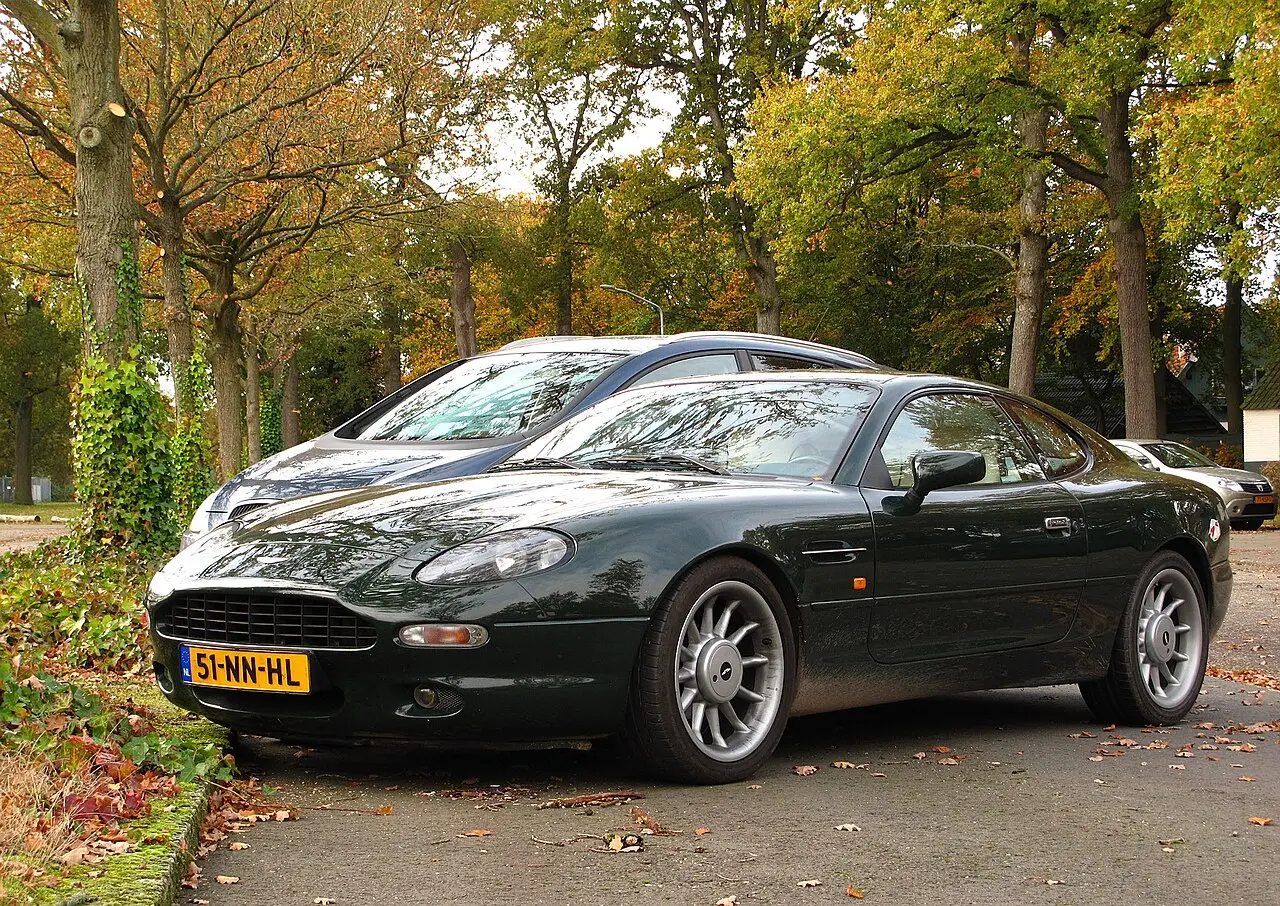
Photo: Rutger van der Maar / Wikimedia Commons · CC BY 2.0

The official data lists 8 versions of the Aston Martin DB7 (1997–2006), in the United Kingdom and the United States. Each market publishes its own figures, measured on its own test procedure.

At a glance

Years in the data
1997–2006
Markets
United Kingdom, United States
Engines
3.2 L to 5.9 L
Fuels
Petrol
Lowest consumption (United States)
15.7 L/100 km (EPA)
Lowest consumption (United Kingdom)
19.5 L/100 km (NEDC)

What is the Aston Martin DB7?

The DB7 is a grand touring sports car, offered as a coupé and later as the open-top Volante. Styled by Ian Callum, it gave Aston Martin a smaller car to sit alongside its larger V8 models. Its long bonnet and flowing shape give it the classic grand touring look, while the cabin is made for covering distance.

The DB7 ran from 1994 to 2004. The Volante joined the coupé, and the Vantage brought a new V12 engine and revised styling to the range.

Engines and power

The early DB7 used a supercharged straight-six. The Vantage later introduced Aston Martin’s V12. In UK VCA figures, six petrol versions with 5.9-litre engines are listed from 2004 to 2006. US EPA figures list two petrol versions with 3.2-litre engines from 1997 to 1998.

How economical is the Aston Martin DB7?

The UK figure is 19.5 L/100 km on the NEDC test. In the United States, the EPA rates the DB7 at 15 MPG combined, or 15.7 L/100 km. The figures use different test procedures, so they are best understood within their own markets.

Where was the DB7 sold?

The DB7 appears in UK VCA figures for 2004 to 2006 and US EPA figures for 1997 to 1998. Its role as a smaller Aston Martin grand tourer helped broaden the marque’s range alongside its larger V8 cars.

Questions and answers

Was the DB7 available as a convertible?

Yes. Aston Martin added the open-top Volante alongside the coupé.

What engine did the DB7 have?

The range began with a supercharged straight-six and later gained a V12 in the Vantage. UK VCA figures list 5.9-litre petrol versions, while US EPA figures list 3.2-litre petrol versions.

What is the DB7’s official fuel consumption?

The UK figure is 19.5 L/100 km on NEDC. The US EPA rates it at 15 MPG combined, or 15.7 L/100 km.

DB7 DB7 (1994–2004)

Aston Martin DB7 DB7
Photo: Rutger van der Maar / Wikimedia Commons · CC BY 2.0

References: astonmartin.com, en.wikipedia.org

United Kingdom 3 versions

New cars on sale in the UK, from the Vehicle Certification Agency. NEDC figures until 2018 and WLTP figures after; years are the editions a version appeared in.

Years and versionEngineFuelGearboxConsumption (combined)CO₂
2004DB7 GTA · DB7 Vantage (Coupé & Convertible)5.9 LPetrol5-speed automatic19.7 L/100 km NEDC472 g/km
2004DB7 GT5.9 LPetrol6-speed manual19.9 L/100 km NEDC476 g/km
2004DB7 Vantage (Coupé & Convertible)5.9 LPetrol6-speed manual19.5 L/100 km NEDC469 g/km

United States 2 versions

Model years sold in the USA, from the EPA and the Department of Energy (fueleconomy.gov). MPG on the EPA test; litres per 100 km = 235.215 ÷ MPG.

Years and versionEngineFuelGearboxDriveConsumption (combined)CO₂
1997–1998(GUZZLER) ASTON-DB7 (FFS), CLKUP · ASTON-DB7, CLKUP3.2 LPetrol4-speed automaticRear-wheel drive15 MPG (15.7 L/100 km) EPA368 g/km
1997–1998(GUZZLER) ASTON-DB7 (FFS) · ASTON-DB73.2 LPetrol5-speed manualRear-wheel drive15 MPG (15.7 L/100 km) EPA368 g/km

Versions outside these generations

United Kingdom 3 versions

New cars on sale in the UK, from the Vehicle Certification Agency. NEDC figures until 2018 and WLTP figures after; years are the editions a version appeared in.

Years and versionEngineFuelGearboxConsumption (combined)CO₂
2006DB7 GTA · DB7 Vantage (Coupé & Convertible)5.9 LPetrol5-speed automatic19.7 L/100 km NEDC472 g/km
2006DB7 GT5.9 LPetrol6-speed manual19.9 L/100 km NEDC476 g/km
2006DB7 Vantage (Coupé & Convertible)5.9 LPetrol6-speed manual19.5 L/100 km NEDC469 g/km

Official figures are measured on standard test procedures and differ between markets. Your consumption depends on how, where and in what conditions you drive.