American Motors

American Motors Eagle

American Motors Eagle
Photo: Mr.choppers / Wikimedia Commons · CC BY-SA 3.0

The official data lists 12 versions of the American Motors Eagle (1984–1987), in the United States. Each market publishes its own figures, measured on its own test procedure.

At a glance

Years in the data
1984–1987
Markets
United States
Engines
2.5 L to 4.2 L
Fuels
Petrol
Lowest consumption (United States)
11.2 L/100 km (EPA)

What kind of car was the AMC Eagle?

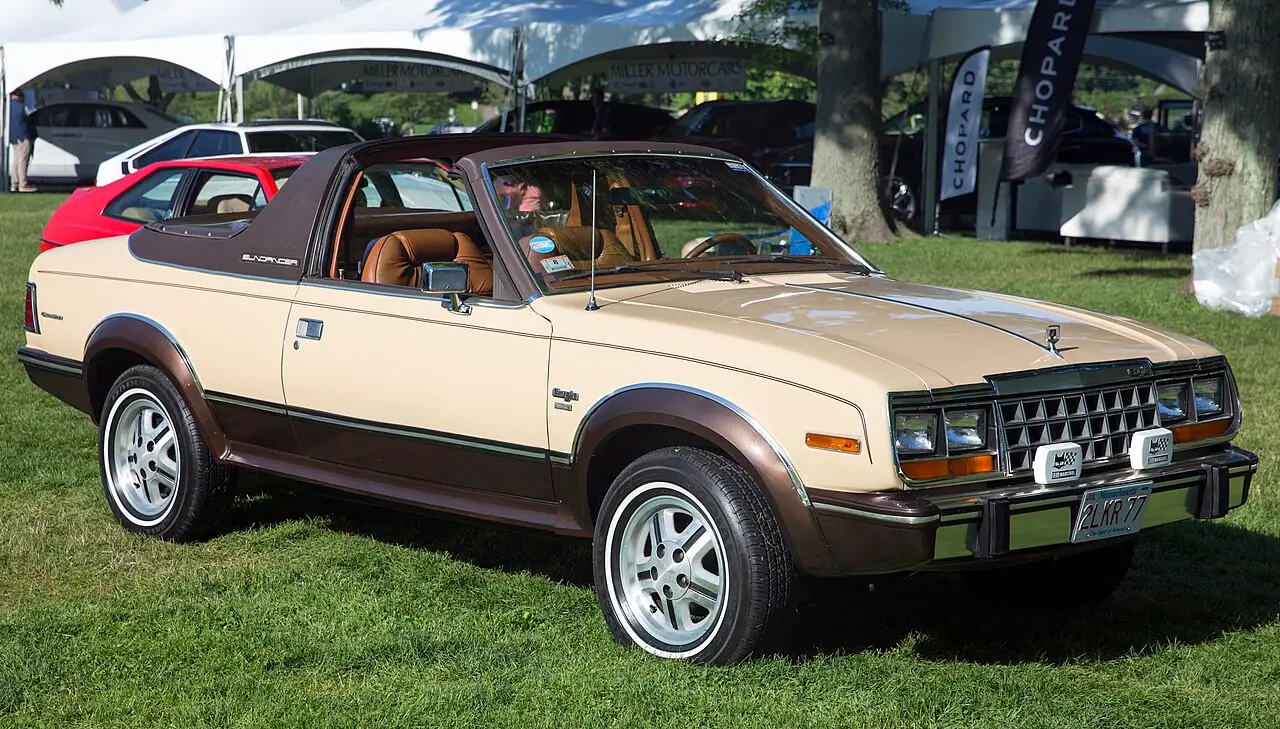
The AMC Eagle was a passenger car with four-wheel drive, built for drivers who wanted the familiar shape of a car with extra traction. It came as a coupe, sedan or station wagon, with roomier body styles alongside more compact versions.

The first generation ran from 1980 to 1987. The SX/4 and Kammback joined the range as smaller two-door models, broadening the Eagle line beyond its coupe, sedan and wagon forms.

Engines and power

The US range included petrol engines from 2.5 L to 4.2 L. The Eagle paired its passenger-car body styles with four-wheel drive, a distinctive approach for American Motors.

How economical was the AMC Eagle?

The EPA’s best combined fuel-economy figure for the Eagle is 21 MPG. Its lowest listed consumption is 11.2 L/100 km. These are EPA test results; procedures differ from the WLTP and NEDC tests used in Europe and Canada’s 5-cycle test.

US EPA figures cover model years 1984–1987 and include 12 versions.

Questions and answers

What years was the AMC Eagle’s first generation sold?

The first generation ran from 1980 to 1987.

What body styles did the Eagle include?

The Eagle came as a coupe, sedan and station wagon, with smaller SX/4 and Kammback models in the range.

What engines were available in the US EPA figures?

The US range included petrol engines from 2.5 L to 4.2 L.

What is the Eagle’s best combined EPA fuel-economy figure?

Its best combined EPA figure is 21 MPG.

Eagle first generation (1980–1987)

American Motors Eagle first generation
Photo: Mr.choppers / Wikimedia Commons · CC BY-SA 3.0

Sold in: United States · References: en.wikipedia.org, upi.com

United States 12 versions

Model years sold in the USA, from the EPA and the Department of Energy (fueleconomy.gov). MPG on the EPA test; litres per 100 km = 235.215 ÷ MPG.

Years and versionEngineFuelGearboxDriveConsumption (combined)CO₂
1985–1987(FFS)4.2 LPetrol3-speed automaticFour- or all-wheel drive16 MPG (14.7 L/100 km) EPA345 g/km
1985–1987(FFS)4.2 LPetrol5-speed manualFour- or all-wheel drive17 MPG (13.8 L/100 km) EPA325 g/km
1985(FFS) CA model4.2 LPetrol5-speed manualFour- or all-wheel drive17 MPG (13.8 L/100 km) EPA325 g/km
1984(FFS) · (FFS) CA model2.5 LPetrol3-speed automaticFour- or all-wheel drive18 MPG (13.1 L/100 km) EPA307 g/km
1984(FFS) · (FFS)(SIL) CA model2.5 LPetrol4-speed manualFour- or all-wheel drive20 MPG (11.8 L/100 km) EPA276 g/km
1984(FFS)2.5 LPetrol5-speed manualFour- or all-wheel drive21 MPG (11.2 L/100 km) EPA263 g/km
1984(FFS)4.2 LPetrol3-speed automaticFour- or all-wheel drive18 MPG (13.1 L/100 km) EPA307 g/km
1984(FFS)4.2 LPetrol4-speed manualFour- or all-wheel drive17 MPG (13.8 L/100 km) EPA325 g/km
1984(FFS) · (FFS) CA model4.2 LPetrol5-speed manualFour- or all-wheel drive18 MPG (13.1 L/100 km) EPA307 g/km
1984(FFS) · (FFS) CA model4.2 LPetrol3-speed automaticFour- or all-wheel drive17 MPG (13.8 L/100 km) EPA325 g/km
1984(FFS) CA model4.2 LPetrol4-speed manualFour- or all-wheel drive17 MPG (13.8 L/100 km) EPA325 g/km
1984(FFS) CA model4.2 LPetrol3-speed automaticFour- or all-wheel drive17 MPG (13.8 L/100 km) EPA325 g/km

Official figures are measured on standard test procedures and differ between markets. Your consumption depends on how, where and in what conditions you drive.