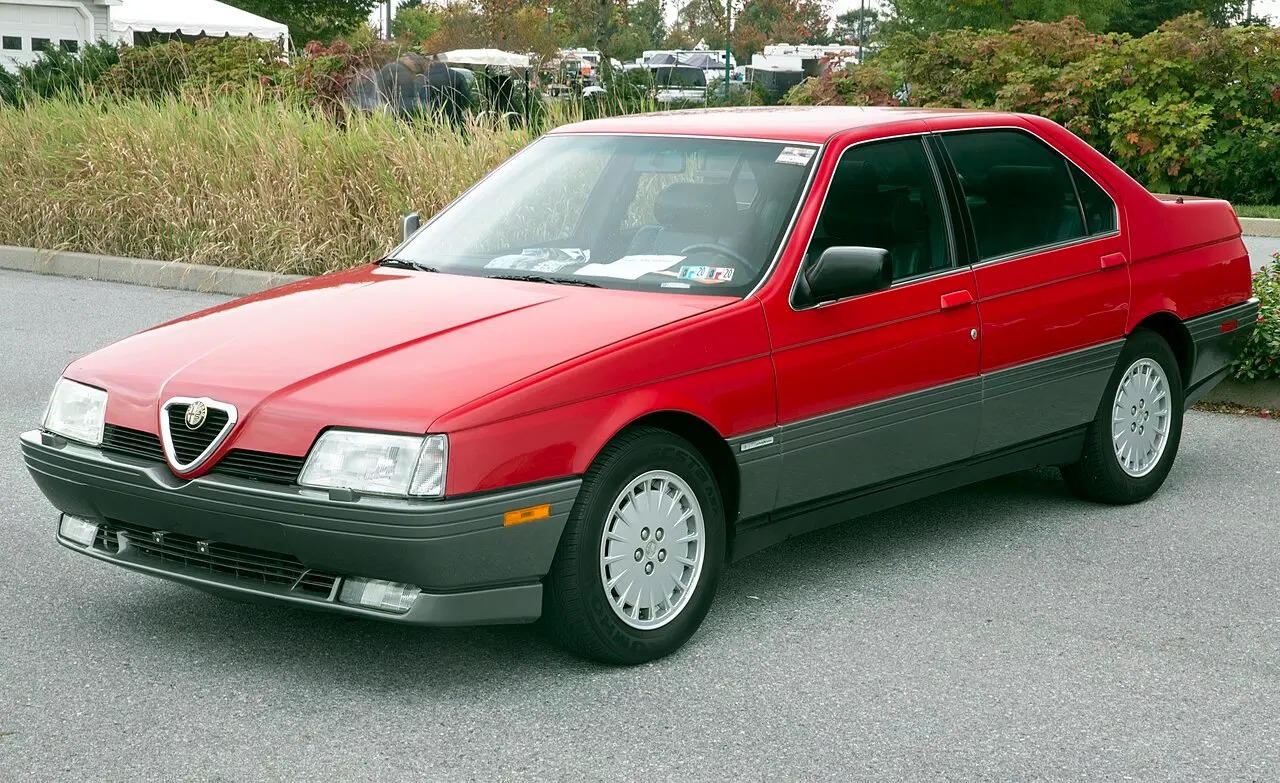
What is the Alfa Romeo 164?
The Alfa Romeo 164 is a four-door executive saloon sold from 1987 to 1998. Its design came from Pininfarina, and its clean, formal shape brought a distinctive look to the upper end of Alfa Romeo’s range. The roomy saloon format suited everyday driving and longer journeys.
The 164 used front-wheel drive, with four-wheel drive available on selected versions. Its layout marked a change from the rear-wheel-drive saloons that had preceded it in Alfa Romeo’s range.
Generations, engines and power
The 164 had one generation, known as Type 164, sold from 1987 to 1998. Engine choices varied by market and included petrol and diesel options. In the United States and Canada, the versions in the official figures used 3.0-litre petrol engines.
The North American figures cover engine size and consumption, but do not state power output.
Official fuel consumption and CO₂
In the United States, EPA figures cover five petrol versions from 1991 to 1995, all with 3.0-litre engines. The best combined rating is 19 MPG, with the lowest stated consumption at 12.4 L/100 km on the EPA test.
In Canada, NRCan figures cover two 3.0-litre petrol versions for 1995. Their lowest stated consumption is 13.3 L/100 km on the Canadian five-cycle test. The EPA and Canadian five-cycle procedures differ, so these results are not directly comparable. European WLTP and older NEDC procedures differ from them too. The figures do not state CO₂ values.
Where was the 164 sold?
The 164 was sold in Europe and North America, including the United States and Canada. The EPA figures cover US versions from 1991 to 1995, while the Canadian figures cover versions for 1995.
Questions and answers
How many generations of Alfa Romeo 164 were there?
One, the Type 164 generation, sold from 1987 to 1998.
What engine was fitted to the US and Canadian Alfa Romeo 164 versions?
The versions in the EPA and NRCan figures all use a 3.0-litre petrol engine.
How economical is the Alfa Romeo 164 in the USA?
The best combined EPA rating is 19 MPG, or 12.4 L/100 km, among the five petrol versions covered from 1991 to 1995.
Why do the US and Canadian consumption figures differ?
The US figure uses the EPA test and the Canadian figure uses NRCan’s five-cycle test. Different procedures can produce different results.