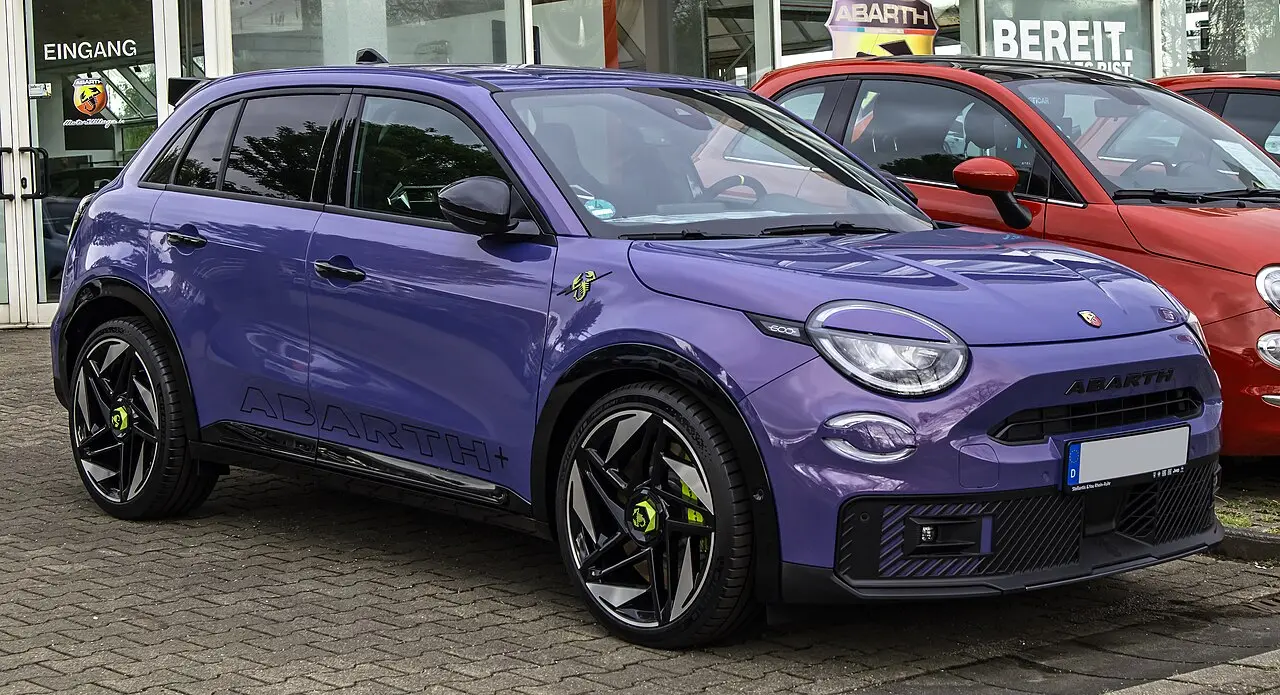
Abarth

Abarth 600e

Abarth 600e
Photo: © M 93 / Wikimedia Commons · CC BY-SA 3.0 de

The official data lists 9 versions of the Abarth 600e (2024–2026), in the European Union and the United Kingdom. Each market publishes its own figures, measured on its own test procedure.

At a glance

Years in the data
2024–2026
Markets
European Union, United Kingdom
Power
175 kW (238 PS) to 207 kW (281 PS)
Fuels
Electric
New registrations in the EU
553

What is the Abarth 600e?

The Abarth 600e is an electric crossover that brings the marque’s sporting treatment to a raised-body car. Its electric powertrain marks a shift from the petrol-powered small hatchbacks that have long featured in Abarth’s modern range. The model retains the brand’s focus on compact cars, an approach rooted in its history of tuning and motorsport.

The first generation, code 365, began in 2024. The 600e is offered as an electric model, with two power levels represented in EU and UK figures.

Engines and power

The 600e is powered by an electric motor. Output ranges from 175 kW (238 PS) to 207 kW (281 PS) in both the EU and UK figures. EU registrations include both outputs; the UK range lists both as well.

How economical is the Abarth 600e?

The 600e uses electricity, so petrol consumption does not apply. Test procedures differ by market: Europe uses WLTP or the older NEDC, the USA uses EPA testing, and Canada uses a 5-cycle procedure.

Where is the Abarth 600e sold?

EU registrations cover 2024–2025, with 553 cars registered in total. UK VCA listings cover 2025–2026. The model belongs to the 365 generation, which began in 2024.

Questions and answers

Is the Abarth 600e electric?

Yes. The 600e is an electric crossover.

How much power does the Abarth 600e produce?

Its electric motor is rated at 175 kW (238 PS) or 207 kW (281 PS), depending on version.

When did the Abarth 600e arrive?

Its first generation began in 2024. EU registrations are listed for 2024–2025, and UK listings for 2025–2026.

600e first generation (since 2024)

Abarth 600e first generation
Photo: © M 93 / Wikimedia Commons · CC BY-SA 3.0 de

Model codes: 365 · Sold in: European Union and United Kingdom · References: media.stellantis.com, en.wikipedia.org

European Union 5 versions

New cars registered in the EU (plus Norway and Iceland), from the European Environment Agency. Figures on the NEDC procedure until 2020 and on WLTP from 2021; versions are grouped by engine and power, with their number of registrations.

Years and versionEnginePowerFuelConsumption (combined)CO₂Electric rangeEU registrations
2025Electric motor207 kW (281 PS)Electric18.0 kWh/100 km WLTP0 g/km333 km334
2025Electric motor175 kW (238 PS)Electric17.9 kWh/100 km WLTP0 g/km336 km167
2025Electric motor208 kW (283 PS)Electric18.1 kWh/100 km WLTP0 g/km333 km10
2024Electric motor207 kW (281 PS)Electric17.8 kWh/100 km WLTP0 g/km337 km30
2024Electric motor175 kW (238 PS)Electric17.8 kWh/100 km WLTP0 g/km339 km12

United Kingdom 4 versions

New cars on sale in the UK, from the Vehicle Certification Agency. NEDC figures until 2018 and WLTP figures after; years are the editions a version appeared in.

Years and versionEnginePowerFuelGearboxConsumption (combined)CO₂Electric range
2025–202654kWh 240hp · 54kWh 240hp (VL)Electric motor175 kW (238 PS)ElectricAutomatic17.5 kWh/100 km WLTP0 g/km344 km
2025–202654kWh 240hp · 54kWh 240hp (VH)Electric motor175 kW (238 PS)ElectricAutomatic19.0 kWh/100 km WLTP0 g/km315 km
2025–202654kWh 280hp · 54kWh 280hp (VL)Electric motor207 kW (281 PS)ElectricAutomatic17.5 kWh/100 km WLTP0 g/km344 km
2025–202654kWh 280hp · 54kWh 280hp (VH)Electric motor207 kW (281 PS)ElectricAutomatic19.0 kWh/100 km WLTP0 g/km315 km

Official figures are measured on standard test procedures and differ between markets. Your consumption depends on how, where and in what conditions you drive.