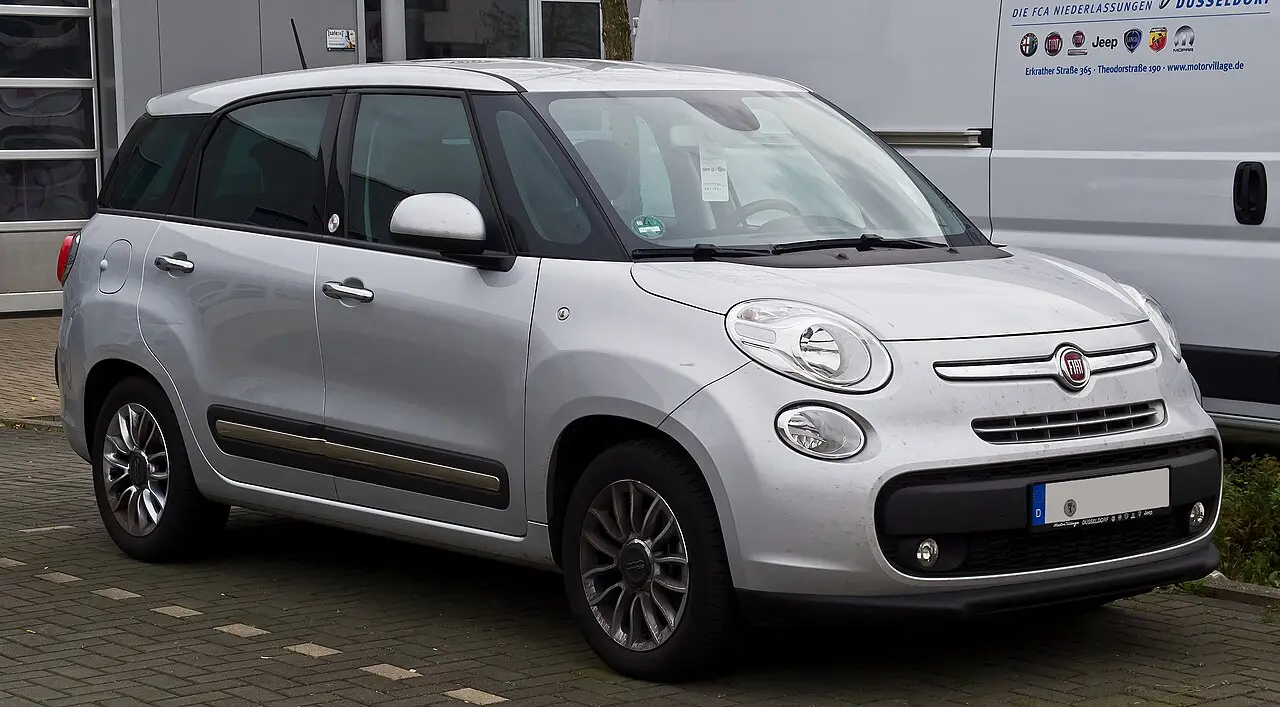
What is the Abarth 500L?
The 500L is a taller, roomier member of Fiat’s 500 family, with a more practical shape than the small 500. The 2014 European Union registrations include petrol and diesel versions under the Abarth 500L name.
Engines and power
The 2014 European Union registrations include a 0.9-litre petrol version producing 77 kW (105 PS) and a 1.2-litre diesel version. No power figure is listed for the diesel.
How many Abarth 500L cars were registered in the EU?
There were 156 registrations in 2014: 121 for the 0.9-litre petrol version and 35 for the 1.2-litre diesel.
Where was the Abarth 500L sold?
The listed registrations are from the European Union in 2014.
Questions and answers
What kind of car was the Abarth 500L?
The 500L was a taller, roomier member of Fiat’s 500 family.
What engine power is listed for the Abarth 500L?
The 0.9-litre petrol version is listed at 77 kW (105 PS). No power figure is listed for the 1.2-litre diesel.
How many EU registrations are listed for 2014?
There were 156: 121 for the 0.9-litre petrol and 35 for the 1.2-litre diesel.
Are official fuel-consumption and CO₂ figures stated?
No fuel-consumption or CO₂ figures are included here.